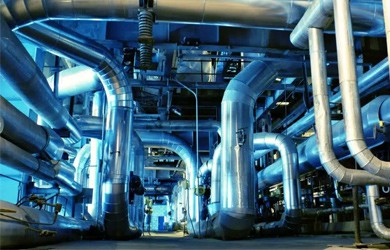
The design of piping systems requires comprehensive technical expertise and coordination. It presents planners with complex challenges requiring modern technologies and planning solutions.
· Increasing demands on piping design. Piping systems are essential for transporting liquids, gases and solids in many branches of industry. Their reliable function is of central importance for trouble-free operation in industries such as the chemical, oil and gas, food and energy sectors. Planning and designing such systems is a complex process in which numerous factors such as the type of media to be transported, pressure and temperature conditions and corrosion resistance must be considered. Safety regulations and legal standards also play a decisive role. This complexity places high demands on engineers and technicians. And as procedures and processes become increasingly complex, so do the requirements in piping design.
· The role of 3D technologies. Technological innovations, particularly in the field of 3D modelling and digital planning tools, offer considerable advantages. These technologies enable detailed visualisation of piping systems and help identify and rectify planning errors at an early stage. The use of 3D models has proven to be particularly advantageous. They enable a realistic representation of the pipeline route and perform automated collision checks and layout optimisation. This makes a significant contribution to reducing planning errors and increasing planning reliability.
· Integrated software solutions as the key to greater efficiency. Today, modern software solutions in piping design offer a wide range of integrated functions for creating P&ID diagrams and then using this data in 3D design. Downstream processes such as the generation of parts lists and pipework isometrics can then be completely automated on the basis of the 3D design. These tools support engineers in creating precise and error-free planning documents and contribute to the optimisation of material procurement and cost calculation.
The integration of modern technologies into the design and engineering of piping systems offers significant advantages. By using modern software solutions such as M4 Plant, planning errors can be minimised and efficiency increased. In this way, piping design can meet the increasing demands of the industry and remain equipped for the future.
CAD Schroer is a global software development company and provider of digitalisation and engineering software solutions, helping to raise the productivity and competitiveness of customers working in manufacturing and process engineering, including the automotive sector and its supply chain, the energy sector and public utilities. CAD Schroer has offices and subsidiaries throughout Europe and in the US.
CAD Schroer’s product portfolio includes 2D/3D CAD, plant design, factory layout and data management solutions. Customers in 39 countries rely on M4 Drafting, M4 Plant, M4 ISO and M4 P&ID FX to provide an efficient, flexible and integrated design environment for all phases of product or plant design – cutting costs while raising quality.
CAD Schroer’s product portfolio also includes solutions such as i4 Augmented Review, i4 Augmented Catalog and i4 Virtual Review, which enable CAD data to be used directly in augmented (AR) and virtual (VR) reality. In addition, CAD Schroer works closely with its customers to create custom AR/VR or IoT (Internet of Things) solutions. CAD Schroer emphasizes close customer partnerships and supports its clients’ objectives through extensive consultancy, training, development, software support and maintenance services.