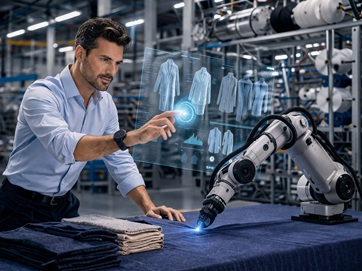
This text explores the transition of the textile industry into Industry 5.0, a paradigm where advanced technology and human expertise collaborate to create safer, more sustainable, and more resilient manufacturing systems. Unlike previous automation phases focused solely on efficiency, this era emphasizes a human-centric approach where intelligent machines work alongside skilled operators to enhance decision-making.
Historical and Technological Evolution
The text draws a parallel between today’s digital revolution and the invention of the Jacquard loom over two centuries ago. This groundbreaking machine introduced early programmable manufacturing through punched cards, which later inspired foundational steps in modern computer science. While such disruptions historically sparked fears of labor displacement—such as the Luddite movement—they eventually led to the emergence of new roles in engineering and elevated the industry’s technical sophistication.
Transforming the Workforce
Advanced manufacturing technologies, including AI, robotics, and sensors, are fundamentally reshaping the mill environment:
• Intelligent Systems: Modern sensors monitor yarn tension and quality, correcting faults automatically and allowing operators to focus on higher-value supervisory roles rather than repetitive manual tasks.
• Ergonomics and Accessibility: Intuitive interfaces and automated handling systems reduce the physical burdens and hazards historically associated with textile production.
• Hybrid Competencies: Training requirements are shifting from purely manual skills to hybrid competencies that combine textile knowledge with digital literacy and process engineering.
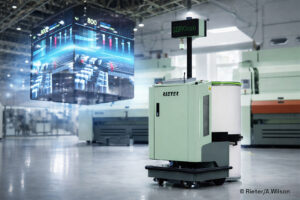
Sustainability and the Next Chapter
Industry 5.0 addresses mounting environmental pressures by enabling precise control over energy and water usage. Furthermore, data-driven optimization supports demand-responsive models that reduce overproduction and facilitate the use of recycled fibers. These advancements will be a focal point of ITMA 2027, highlighting a future where the synergy between intelligent machines and skilled humans defines global competitiveness.