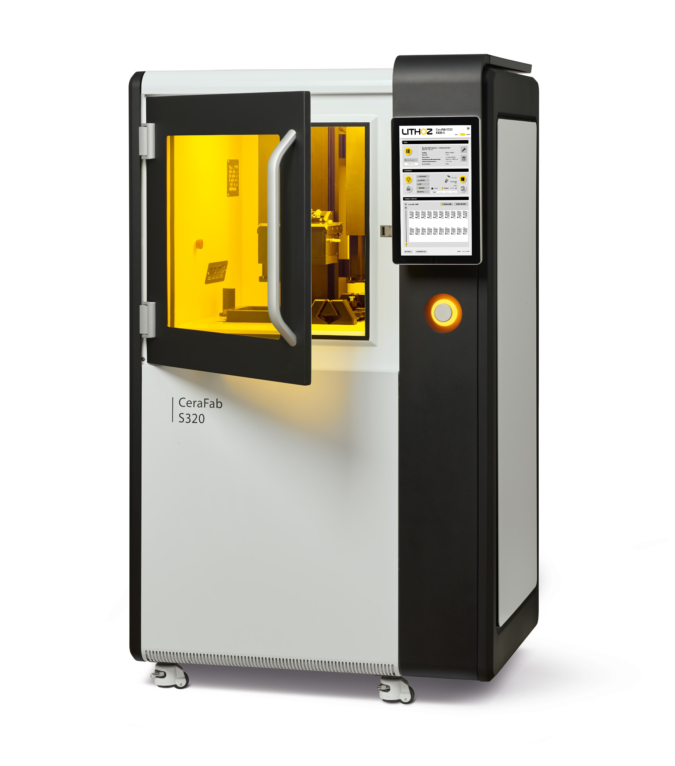
Halfway through 2026, Lithoz reports a record 40% year-over-year revenue growth in their ceramic materials, generating an upwards-revised prognosis for the rest of the calendar year. This increase reflects the growing awareness for the efficiency surplus potential delivered by technical ceramics, as well as the expanding share of LCM printers added to print farms already in operation. The positive trend has been particularly accelerated by Lithoz’s persistent advancement into the MedTech sector, as well as by filled order books and rising batch numbers of contract manufacturers operating LCM fleets. The global network of customers also referred to as “Ceramic 3D Factory” is answering the call with a strong footing in various serial production industries, projects and developments.
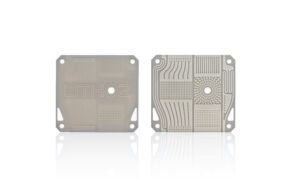
Spanning across continents and uniting industries and academia, the “Ceramic 3D Factory” as a dynamic network built on year-long partnerships is a major driving force behind the reported figures: with more than 50% of the global CeraFab System machines operated by just a fifth of customers, lithography-based ceramic manufacturing-based serial production meanwhile is serving to even the most regulated industries.
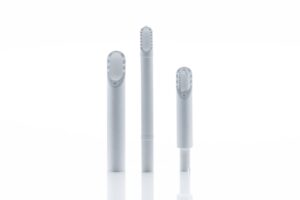
Lithoz CEO Dr. Johannes Homa feels encouraged in his endeavour: “We are not only continuously improving and revalidating our materials. We’ve even developed a good number of customized materials for customers now persistently scaling their production to greater volumes. Reaching ISO 13485 certification for our quality management in material production was a big milestone and proved to be a powerful door opener to many demanding industries; even the most tightly regulated industries that can profit off our technology.”
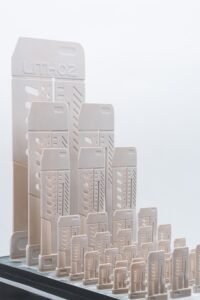
Looking at the details, alumina and zirconia traditionally account for the largest slice of Lithoz’s total material revenue. In contrast, the materials enjoying the steepest individual ascent in demand within the portfolio of 20+ ceramics are aluminium nitride, calcium phosphates and silica-based ceramics.
With its superior thermal conductivity of 211 (W/m K) and a thermal expansion closely matched to silica, aluminium nitride components are being increasingly discovered for critical thermal management applications as found in semicon manufacturing, propulsion systems or data centre cooling.
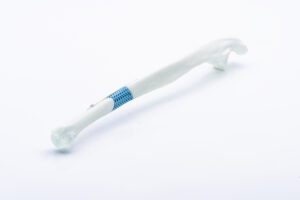
On the other side of the spectrum, the rise in calcium phosphates, paving the way for patient-specific resorbable implants, is primarily based on easier access to extended clinical evidence covering LCM-printed ceramic implants. These publications have now generated more widespread acknowledgement by leading experts, creating a critical mass to influence business growth.
Ceramic casting cores are another industrial success story behind a noteworthy individual surge of a specific Lithoz material. In the wake of Safran Aircraft Engines’ recent adoption of LCM as a key technology to develop the next generation of single crystal turbine blades for future aircraft engines, the demand for this material from the industry has risen sharply and can even be clearly attributed to a single point of reference.
Lithoz is a world and technology leader for high-performance ceramic materials and 3D printers. Founded in 2011, it is committed to breaking the boundaries of ceramic production and supporting customers in expanding the manufacturing opportunities for the ceramic industry. The company has an export share of almost 100%, around 100 employees and 4 different sites worldwide. Since 2016, it has been ISO 9001-2015 certified and in 2025, Lithoz secured ISO 13485 certification to qualify their quality management system to the standards of the medical devices industry.