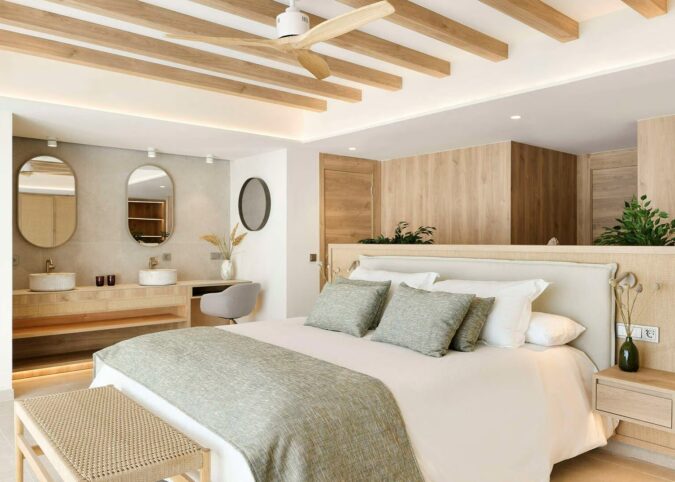
Durante años, el baño de hotel respondió a una fórmula reconocible: colores neutros y materiales resistentes. Hoy, sin renunciar a esas necesidades, el interiorismo comienza a explorar nuevas posibilidades.
El baño se integra cada vez más en el concepto general de la habitación y adopta los códigos estéticos del proyecto. El resultado son espacios más personales, donde el color, los materiales y las formas adquieren una importancia hasta ahora reservada a otras zonas del hotel.
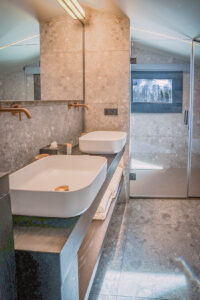
Materiales que transforman el espacio
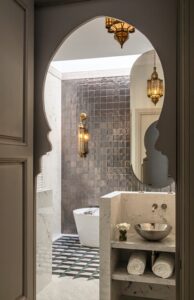
La búsqueda de ambientes más cálidos está llevando al baño materiales y acabados con una fuerte presencia visual. Piedra, madera, superficies texturizadas o acabados mate conviven con la cerámica tradicional y permiten crear composiciones con mayor profundidad.
También cambia la forma de combinarlos. El contraste entre superficies lisas y rugosas, materiales naturales y elementos más depurados aporta riqueza al espacio sin necesidad de introducir demasiados recursos.
Esta mezcla conecta además el baño con una tendencia más amplia del interiorismo hotelero: crear ambientes que transmitan una determinada sensación y que mantengan una relación más estrecha con el lugar en el que se encuentran.
Baños que se acercan a la habitación
También están cambiando los límites entre ambos espacios. Lavabos abiertos hacia el dormitorio, cerramientos de vidrio, zonas de tocador integradas o materiales que continúan de una estancia a otra hacen que baño y habitación comiencen a compartir un mismo lenguaje.
No significa necesariamente eliminar la privacidad, sino buscar una mayor continuidad visual. El baño deja de percibirse como una estancia aislada y pasa a formar parte de la arquitectura interior de la habitación.
La iluminación contribuye a esta transformación. Frente a una luz exclusivamente funcional, aparecen puntos indirectos, espejos retroiluminados y ambientes más suaves que permiten adaptar el espacio a distintos momentos del día.
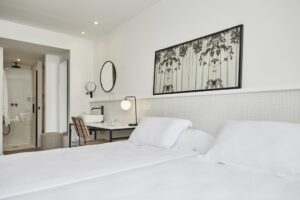
Una nueva mirada al baño hotelero
Más material, más color y una mayor libertad en las formas están dando lugar a baños de hotel cada vez menos previsibles. Espacios en los que la funcionalidad sigue siendo imprescindible, pero ya no determina por sí sola el resultado.
El interiorismo hotelero encuentra así en el baño un nuevo territorio para experimentar y construir identidad. Una forma de entender el baño que también trasladamos con nuestros proyectos Hospitality, adaptándonos a la identidad y las necesidades de cada espacio.
Bathco showcases the latest trends in hotel bathroom design
For years, hotel bathrooms followed a recognizable formula: neutral colors and durable materials. Today, without giving up these requirements, interior design is starting to explore new possibilities.
The bathroom is increasingly integrated into the overall concept of the room, adopting the aesthetic codes of the project. The result is more personal spaces where color, materials, and shapes gain an importance previously reserved for other areas of the hotel.
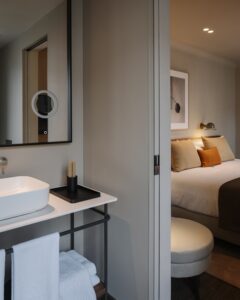
Materials That Transform the Space
The search for warmer atmospheres is bringing materials and finishes with a strong visual presence into the bathroom. Stone, wood, textured surfaces, or matte finishes coexist with traditional ceramics, allowing for compositions with greater depth.
The way they are combined is also changing. The contrast between smooth and rough surfaces, natural materials, and more refined elements adds richness to the space without needing to introduce too many elements.
This mix also connects the bathroom with a broader trend in hotel interior design: creating environments that convey a specific feeling and maintain a closer relationship with their surroundings.
Bathrooms Moving Closer to the Room
The boundaries between both spaces are changing as well. Washbasins open to the bedroom, glass partitions, integrated vanity areas, or materials that continue from one room to another allow the bathroom and bedroom to share the same language.
This does not necessarily mean eliminating privacy, but rather seeking greater visual continuity. The bathroom is no longer perceived as an isolated room and becomes part of the bedroom’s interior architecture.
Lighting contributes to this transformation. Instead of exclusively functional lighting, indirect points, backlit mirrors, and softer atmospheres emerge, allowing the space to adapt to different times of the day.
A New Perspective on Hotel Bathrooms
More materials, more color, and greater freedom in shapes are giving rise to increasingly less predictable hotel bathrooms. Spaces where functionality remains essential, but no longer single-handedly determines the outcome.
Hotel interior design thus finds a new territory in the bathroom to experiment and build identity. A way of understanding the bathroom that we also bring to our Hospitality projects, adapting to the identity and needs of each space.