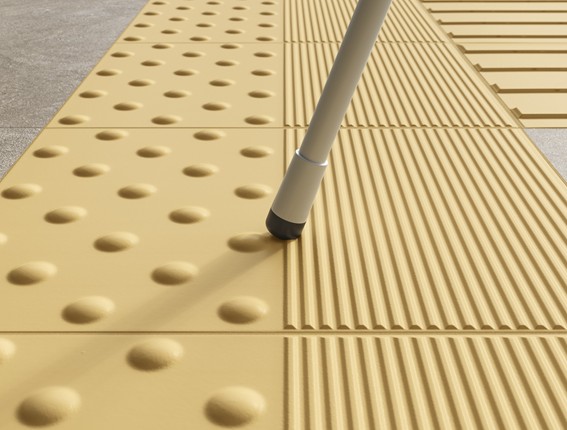
Casalgrande Padana presenta LVE® Tactile, un sistema de orientación de gres porcelánico que combina el tacto y el sonido para ayudar a las personas ciegas y con baja visión a desplazarse por edificios y espacios públicos de forma más segura y autónoma. Reúne diseño, tecnología y accesibilidad, y convierte el pavimento en una herramienta activa de navegación.
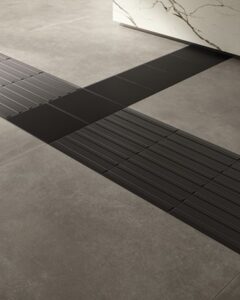
 El sistema combina piezas especiales de gres porcelánico con transpondedores magnéticos, e integra en el suelo un lenguaje táctil y auditivo que hace que las superficies guíen a los usuarios a lo largo de su recorrido.
Lo que lo distingue de otros sistemas es el uso de sensores magnéticos (TAG-RFG). Estos sensores, basados en RFID, se colocan debajo de las piezas cerámicas y los detecta una antena integrada en los bastones inteligentes cuando el usuario camina sobre las baldosas direccionales. Tras el mapeado de la instalación in situ, los sensores envían una señal Bluetooth al auricular, smartphone o tablet del usuario, que la convierte en indicaciones como girar a la derecha o seguir recto, u otra información útil.
LVE® Tactile pertenece a la categoría de indicadores táctiles de superficie (TGSI). Sus códigos táctiles señalan dirección recta, giros obligatorios de 90 grados, intersecciones en X o en T, zonas de atención o servicio, parada o peligro absoluto, y peligro franqueable. La forma, la separación, la altura y el radio de las ranuras de las guías en relieve, junto con los transpondedores colocados con precisión, ofrecen indicaciones verbales rápidas y continuas.
LVE® TACTILE – Porcelain stoneware flooring with wayfinding devices and magnetic sensors (TAG-RFG) for low vision users
Casalgrande Padana presents LVE® Tactile, a wayfinding system made of porcelain stoneware that combines touch and sound to help blind and low-vision people move around buildings and public spaces more safely and independently. It brings together design, technology and accessibility, turning the floor into an active navigation aid.
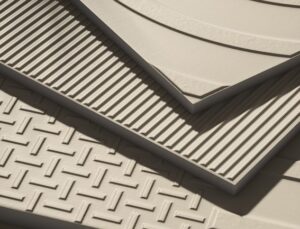
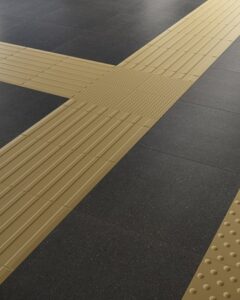 The system pairs special porcelain tile trims with magnetic transponders, building a tactile and auditory language into the flooring so that surfaces guide users along their route.
What sets it apart from other systems is the use of magnetic sensors (TAG-RFG). These RFID-based sensors are placed beneath the tile elements and are detected by an antenna built into smart canes when the user walks over the directional tiles. After the installation has been mapped on site, the sensors send a Bluetooth signal to the user’s earpiece, smartphone or tablet, which converts it into directions such as turn right or go straight, or other useful information.

LVE® Tactile belongs to the Tactile Ground Surface Indicators (TGSI) category. Its tactile codes indicate straight direction, compulsory 90-degree turns, X or T intersections, attention or service areas, stop or absolute danger, and crossable danger. The shape, spacing, height and groove radius of the raised guides, together with the carefully positioned transponders, provide prompt and continuous spoken cues.